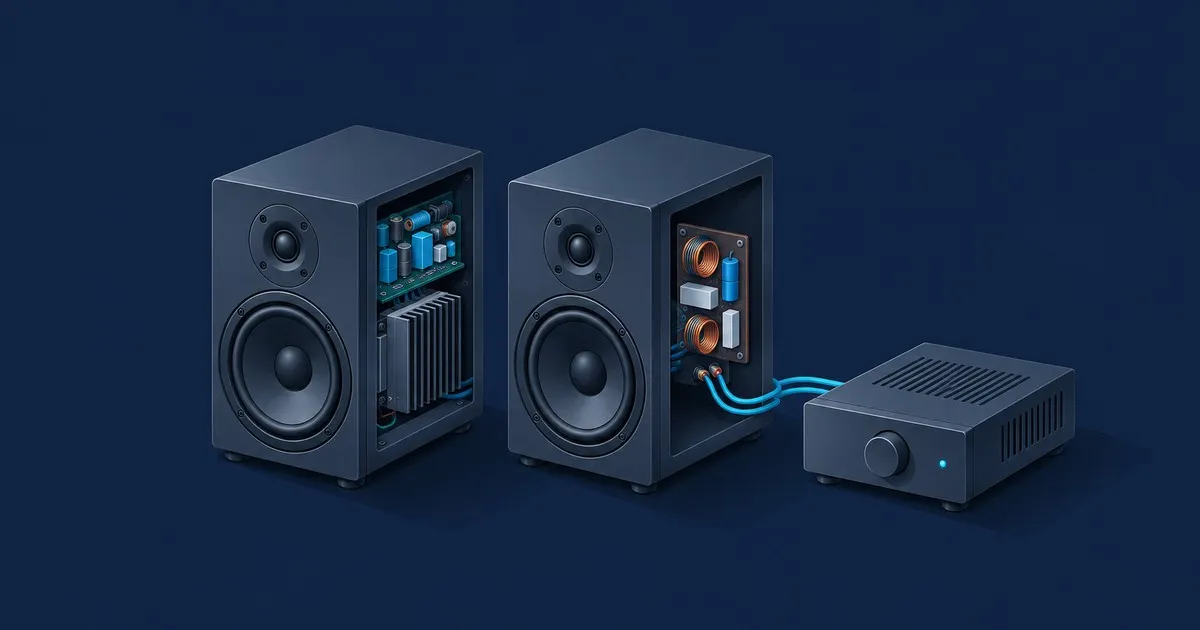
choosing-monitors
Active vs Passive Studio Monitors Explained: Which to Buy
Active studio monitors build in matched amps and a line-level crossover; passive ones need an external amp. W…

What makes a studio monitor subwoofer different from a hi-fi sub, which specs compare, and how to set crossover, phase and level for your monitors.
Read the article →Active studio monitors build in matched amps and a line-level crossover; passive ones need an external amp. W…
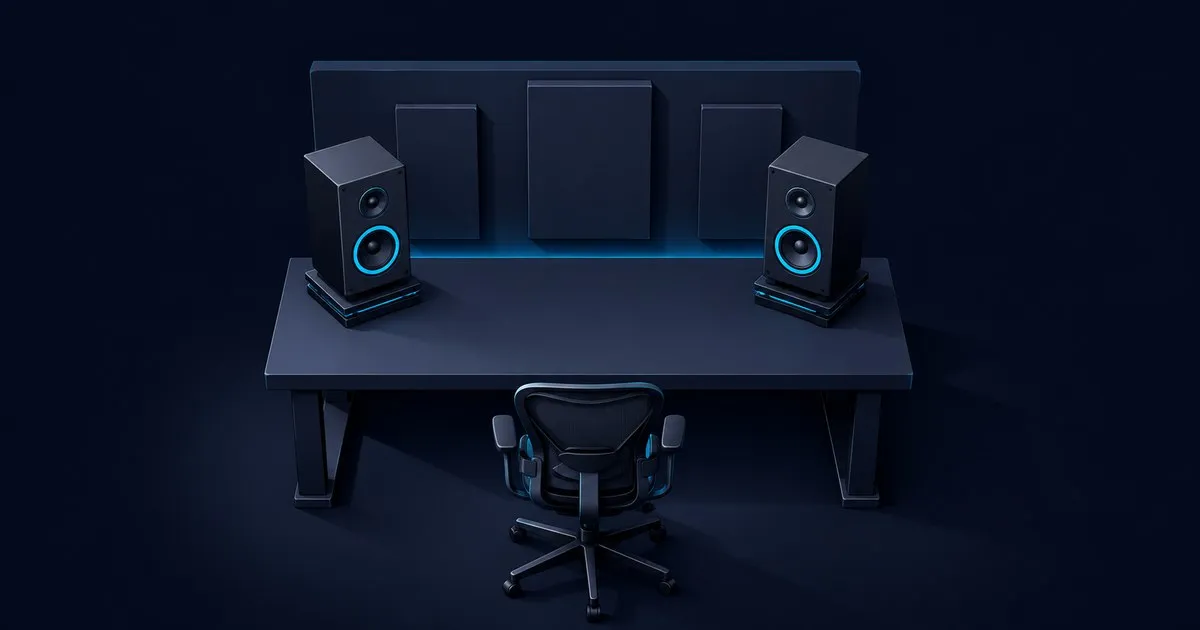
Set studio monitors on a desk using a 60-degree stereo triangle, ear-height alignment, stable supports, wall …
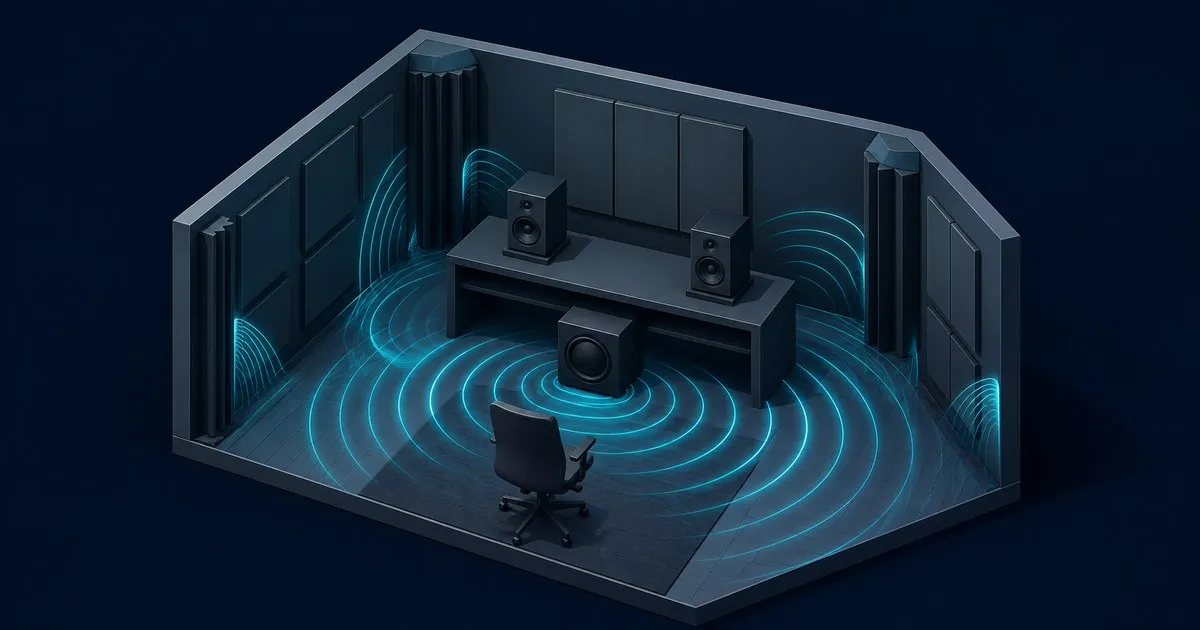
When a subwoofer improves studio monitoring and when it makes the bass worse, from published monitor and sub …

How woofer diameter, room dimensions and listening distance interact, using published response and SPL figure…

This comparison explains how studio monitors and hi-fi speakers differ in voicing, amplification, directivity…

Calculate axial, tangential and oblique room modes from your dimensions, understand why EQ cannot fill a null…
In a small room the walls, floor and ceiling colour the low end more than the speakers do, so every guide here starts from dimensions, listening distance and placement, and treats the cabinet as the last variable rather than the first. Response and output figures are quoted from published manufacturer specifications and named on the page, with no measurements of our own.
Enter length, width and height to get the axial mode series, the modal transition estimate, an example nearfield listening distance and the first boundary cancellation.
Open the calculator